
Building eco-friendly villas is no longer just a trend—it’s a powerful step toward ensuring a sustainable future for our planet. The growing awareness of climate change and the need for resource conservation has made sustainable construction a necessity. By integrating environmentally friendly practices into villa design, not only can you minimize the ecological impact, but you can also create a home that is energy-efficient, healthy for its occupants, and cost-effective over time.
Whether you’re constructing a personal retreat or an investment property, understanding the key principles of green building allows you to design a villa that harmonizes with nature. This balance between luxury and sustainability ensures that the villa will stand the test of time, providing comfort while significantly reducing its carbon footprint.
In this article, we’ll walk you through essential tips and best practices for building eco-friendly villas. From choosing sustainable materials to integrating energy-efficient systems, we’ll show you how to create a villa that not only benefits you but also helps protect the environment. With these practices, you can make a positive, lasting contribution to a greener future.
选择可持续建筑材料
One of the most impactful ways to create an eco-friendly villa is by selecting sustainable materials that lower the environmental impact of the construction process. Traditional materials like concrete and steel, though durable, can contribute significantly to greenhouse gas emissions and resource depletion. In contrast, eco-friendly alternatives offer durability while minimizing the villa’s carbon footprint.
使用回收和可再生材料
Opting for recycled or renewable materials is a fundamental step in sustainable construction. Materials such as reclaimed wood, bamboo, and recycled steel are excellent choices for building eco-friendly villas. Bamboo, for instance, is a rapidly renewable resource, known for its fast growth and minimal environmental impact. Its natural strength and versatility make it perfect for structural elements, flooring, and even furniture.
Additionally, using recycled concrete or bricks can significantly reduce waste and energy consumption during the building process. These materials not only prevent landfill overflow but also reduce the need for new raw material extraction. By incorporating these options, you lower the overall environmental impact, promoting a more circular economy—where waste is minimized, and resources are reused efficiently.
优先考虑本地采购的材料
Using locally sourced materials is another crucial practice in eco-friendly construction. Locally sourced materials not only reduce the carbon emissions associated with long-distance transportation but also support the local economy. For example, using locally harvested stone or native timber helps create a more durable structure suited to the local climate.
Choosing materials from nearby also minimizes the villa’s environmental footprint since transportation contributes heavily to emissions. Local materials often reflect the natural landscape, helping the villa blend seamlessly into its surroundings and enhancing the overall sustainability of the project. By selecting products that are sustainable and locally available, you ensure that the villa is built in harmony with the local environment.
For more insight into the best sustainable construction practices, visit the World Green Building Council’s guide on green building techniques.
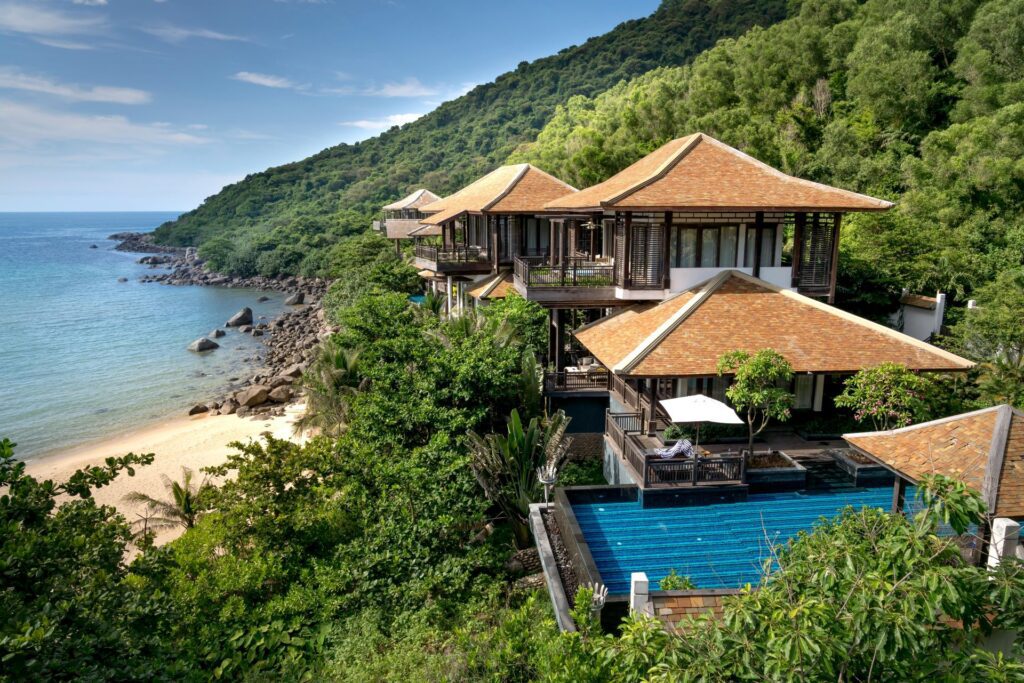
节能设计和系统
Energy efficiency is a fundamental aspect of eco-friendly villa construction. By integrating energy-saving technologies and smart design elements, homeowners can reduce energy consumption, minimize their carbon footprint, and create a more sustainable living environment.
被动设计策略
Passive design is an essential strategy for reducing a villa’s energy use. It focuses on optimizing natural elements like light, ventilation, and thermal performance to regulate indoor temperatures without relying heavily on artificial heating or cooling systems. Some key passive design strategies include:
• Orientation: Positioning the villa correctly is crucial to energy efficiency. For example, aligning the villa to take advantage of natural light can reduce the need for artificial lighting. South-facing windows in cooler climates can help maximize solar gain in winter, while strategically placed shading or overhangs can minimize overheating in tropical or warm climates.
• Natural Ventilation: Cross-ventilation is another passive design technique that helps cool the home naturally. This involves positioning windows or vents on opposite sides of the villa to allow airflow, which reduces the need for air conditioning, especially in humid, tropical climates.
• Thermal Mass: Materials like stone, concrete, and brick have high thermal mass, meaning they can absorb, store, and release heat slowly. These materials help stabilize indoor temperatures by absorbing heat during the day and releasing it at night, reducing reliance on heating and cooling systems.
可再生能源并网
Incorporating renewable energy into your villa is another crucial step toward sustainability. Solar panels are a popular choice for harnessing clean energy from the sun to power lighting, appliances, and air conditioning systems. Solar water heaters can also be installed to provide eco-friendly hot water throughout the year.
Beyond solar, wind turbines can be integrated for properties located in areas with consistent wind patterns, allowing the villa to generate electricity naturally. Additionally, home batteries can store excess energy for later use, ensuring that the villa remains energy-independent even when solar or wind production is low.
By utilizing renewable energy systems, homeowners not only reduce their energy bills but also contribute to the global push for cleaner energy sources, dramatically lowering the carbon emissions associated with everyday living.
节约用水实践
Water conservation is a fundamental aspect of eco-friendly villa design. By implementing water-saving technologies and thoughtful architectural features, you can significantly reduce water consumption, ensuring that the villa operates in an environmentally responsible and sustainable way.
安装雨水收集系统
Installing a rainwater harvesting system is one of the most effective strategies for conserving water in tropical climates. This system captures and stores rainwater for various household uses, such as irrigation, flushing toilets, or even laundry. By reducing reliance on municipal water supplies, rainwater harvesting minimizes the environmental impact and helps conserve natural resources, especially in regions where water shortages are common.
The system is relatively easy to integrate into a villa’s design. Rainwater is collected from the villa’s roof and funneled into storage tanks—either above-ground or underground—where it can be filtered and used for non-potable needs. These systems not only reduce water bills but also support sustainable living by utilizing a natural resource that would otherwise go to waste. Explore the benefits of rainwater harvesting systems for residential properties through this comprehensive guide from the Environmental Protection Agency.
低流量装置和灰水回收
Another highly effective method of water conservation involves installing low-flow fixtures throughout the villa. These include low-flow faucets, toilets, and showerheads, which significantly reduce water usage without compromising functionality. For instance, low-flow toilets can cut water usage by more than half, and low-flow showerheads maintain water pressure while using less water.
Additionally, implementing a greywater recycling system can further enhance water efficiency. Greywater recycling captures wastewater from sources like sinks, showers, and washing machines, treating it for reuse in irrigation or toilet flushing. This system allows homeowners to reduce their water consumption by reusing water that would otherwise be discarded, making it a key component of any sustainable villa. Together, these strategies help minimize water waste and promote a greener, more resource-efficient home.
景观美化和可持续户外空间
Sustainability goes beyond the villa itself—it includes the outdoor spaces that surround your property. Thoughtfully designing eco-friendly landscapes is a critical component of creating a sustainable lifestyle, ensuring that the villa’s environmental impact is minimized across every element of the property.
使用本土植物
Integrating native plants into the villa’s landscape enhances its natural appeal while promoting sustainability. Native species are perfectly adapted to the local climate, requiring less water, fewer fertilizers, and minimal maintenance compared to non-native plants. This makes them an eco-friendly choice, reducing the need for irrigation and harmful chemical inputs. In addition, native plants help support local wildlife and biodiversity, creating a balanced ecosystem around your villa.
通过选择当地植物群,随着时间的推移,别墅业主还可以从降低的园林绿化成本中受益。这些植物在其环境中自然繁衍生息,比非本地物种更好地抵御当地的天气条件和害虫。无论您种植茂盛的热带树木、开花灌木还是地被植物,本土植物都能确保您的花园保持活力和美丽。
节水设计
Water-efficient landscaping is essential for reducing outdoor water consumption, especially in regions where water resources may be limited. Techniques like xeriscaping are ideal for tropical climates, incorporating drought-resistant plants, gravel, and mulch to retain soil moisture while reducing reliance on irrigation systems.
In addition to choosing low-water plants, you can also design the landscape to maximize natural rainwater retention by creating rain gardens or using permeable surfaces like gravel paths and patios. These features allow rainwater to be absorbed into the ground, reducing runoff and promoting healthier soil. Combined with rainwater harvesting systems for garden irrigation, these methods create a sustainable, low-impact outdoor space that complements the eco-friendly villa design.
Heveatecture 对可持续建筑的承诺
When it comes to building eco-friendly villas in Koh Samui, few companies embrace sustainability as deeply as Heveatecture. Their commitment to environmentally responsible construction aligns perfectly with the growing demand for sustainable homes that integrate seamlessly with the natural landscape. By choosing Heveatecture, you not only invest in a stunning property but also contribute to a greener future.
优先考虑可持续材料和技术
At the core of Heveatecture’s approach is the thoughtful use of sustainable materials. From responsibly sourced teak wood to innovative recycled materials, Heveatecture focuses on building villas that minimize their environmental footprint. Their designs incorporate locally sourced resources, ensuring reduced carbon emissions associated with transportation while supporting local economies.
Moreover, Heveatecture emphasizes energy-efficient construction. Every villa is carefully designed to optimize natural ventilation, reduce energy consumption, and make the most of the island’s tropical climate. By integrating passive design strategies like maximizing natural light and incorporating solar energy systems, Heveatecture helps clients significantly lower their energy bills while reducing reliance on non-renewable energy.
创造持久的环保家园
Heveatecture’s philosophy goes beyond the initial construction phase. They believe in building villas that not only last but also thrive in the tropical climate. Their team ensures that every project includes features like rainwater harvesting systems, greywater recycling, and drought-resistant landscaping. These systems enhance the villa’s sustainability, reduce resource consumption, and create properties that are in harmony with their environment.
By focusing on long-term sustainability, Heveatecture ensures that your villa is not just a beautiful home but also a forward-thinking investment. Whether you are building a private residence or a luxury rental property, their expertise in eco-friendly design makes your project a model for responsible development in Koh Samui.
结论
Building an eco-friendly villa requires careful consideration of every aspect—from the materials used in construction to energy systems and environmental footprint. By selecting sustainable materials, incorporating energy-efficient design, practicing water conservation, and creating eco-friendly outdoor spaces, you can create a villa that benefits both the planet and its occupants.
Sustainable construction offers long-term cost savings through reduced energy and water consumption while promoting healthier living conditions. Additionally, eco-conscious design adds value to the property, appealing to environmentally responsible buyers or renters. Investing in sustainable practices is not just a way to protect the environment—it’s a forward-thinking approach that ensures the longevity and market appeal of your villa for years to come.
10 常见问题解答 – 建设生态友好型别墅
柚木、再生木材、竹子和再生钢材是流行的环保材料,耐用且可持续。
被动设计策略,如自然通风和最佳建筑朝向,通过利用环境来调节室内温度,减少人工加热和冷却的需要。
雨水收集涉及收集和储存雨水以供再利用,减少对市政供水的依赖并保护这一宝贵资源。
是的,太阳能电池板可以利用可再生能源为家庭系统供电,从而显着降低别墅的能源成本和碳足迹。
当地采购的材料可减少与运输相关的碳排放,支持当地经济,同时确保材料适合当地气候。
安装低流量固定装置,使用灰水回收系统,并用抗旱植物设计景观以节约用水。
Many regions have regulations that encourage sustainable construction, including energy efficiency standards and environmental impact assessments.
干旱造景是一种景观美化技术,通过使用抗旱植物来减少灌溉需求,使其成为降雨量多变的热带地区的理想选择。
是的,由于能源和水的使用量减少,以及耐用材料的维护较少,生态友好型别墅通常具有较低的长期成本。
与专门从事绿色建筑技术的建筑师和承包商合作,并咨询当地环境法规,以确保您的别墅符合可持续发展标准。